Empowering Bangladeshi Tribal Communities Together
Adibasi is dedicated to supporting and uplifting Bangladeshi tribal communities through sustainable programs in education, health, culture, and livelihood.
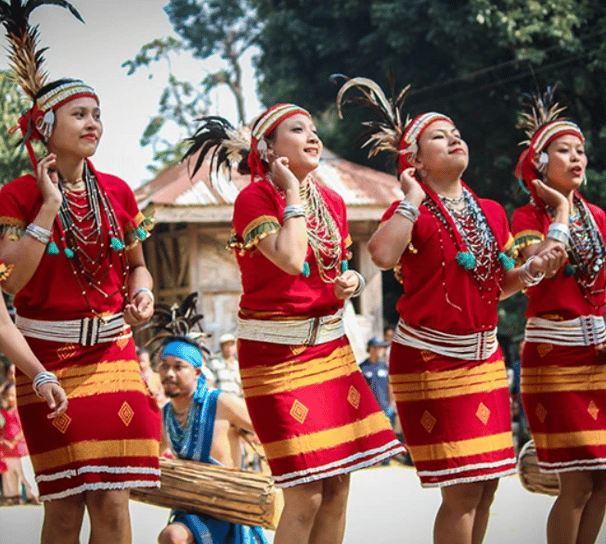
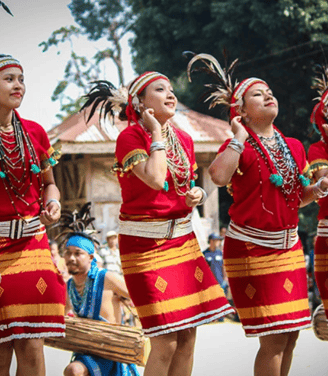
Inspiring change through community engagement.
Community
"
Tribal Communities in Bangladesh
Bangladesh is by and large religiously, ethnically and linguistically homogeneous. Its population of nearly 163 million (estimated 20161) comprised of roughly 90 percent Muslim, with about 7% Hindus and others mainly following Buddhism and Christianity. Close to 99 percent speak Bengali. The overwhelming numbers of people are ethnic Bengalis although they are a mixed group containing Aryan, Dravidian, Mongoloid and other racial traits.
However, all across its territory, a large number of minority groups inhabit most of whom continue to keep their distinct ethnic traits, social institutions and organizations, and cultural traditions. In other words, many of them could be taken as ‘indigenous peoples’ as defined in various UN human rights instruments and policies, including the World Bank’s safeguards policy OP 4.10.
The Government of Bangladesh has generally preferred to use the term ‘tribal/tribe’ (Upajati in Bengali) or most recently, ‘small ethnic groups’ or ‘ethnic minorities’ rather than officially recognizing the presence of ‘indigenous peoples’ within the national territory. This is despite the growing presence and importance given to the subject in recent public debates.
The Small Ethnic Groups Cultural Institution Act 2010 uses the term “khudronrigoshthhi” (small ethnic groups) to refer to the indigenous peoples. However, in the definitions section, when explaining the meaning of the term “khudronrigoshthhi”, it uses the term “adibashi”, the Bengali equivalent of indigenous or aboriginal. A 2011 amendment to the Constitution refers to the indigenous peoples of Bangladesh as “tribes”, “minor races” and “ethnic sects and communities”. According to the Bangladesh Adivasi Forum, an apex advocacy and networking organization of the ethnic minorities, there are 3 million tribal peoples residing in Bangladesh territory largely concentrated in the Chittagong Hill Tract (CHT) districts (Rangamati, Khagrachari and Bandarban) in Chittagong Division. In any estimate, tribal peoples constitute no more than between 1-2% of the total population of Bangladesh.
The total number of indigenous groups is also a matter of much disagreement. The 1991 census mentions 29 groups. The recently adopted Small Ethnic Minority Cultural Institution Act (April 2010) mentions 27 different groups which is at present under revision and proposes 50 different groups. The Bangladesh Adivasi Forum includes as many as 45 indigenous groups as per one of their publications (Solidarity, 2003). A proposed draft law, called Bangladesh Indigenous Peoples‟ Rights Act, by Bangladesh Parliamentary Caucus on Indigenous Peoples – a group of parliamentarians who advocate for the rights of the country’s ethnic minority/indigenous peoples – enlists as many as 59 distinct ethnic minority groups. Yet a further study (2015) commissioned by UNDP for mapping of the different ‘indigenous peoples’ communities‟ could not draw a ‘definitive conclusion’ on the exact number. The reason stems partly from a vibrant movement of ethnic minority communities in recent years – particularly since the signing of the CHT Accord in December 1997 - with more marginalized groups increasingly becoming aware and assertive of their identity.
Notwithstanding the confusion about the exact number of the ethnic minority groups in Bangladesh, the project, for the purpose of its interventions, will adopt the World Bank’s criteria for the identification of the indigenous peoples (i.e. ethnic minorities) which are as follows;
self-identification as members of a distinct indigenous cultural group and recognition
of this identity by others;
collective attachment to geographically distinct habitats or ancestral territories in the
project area and to the natural resources in these habitats and territories;
customary cultural, economic, social, or political institutions that are separate from
those of the dominant society and culture; and
adistinct language, often different from official language of the country/ region.
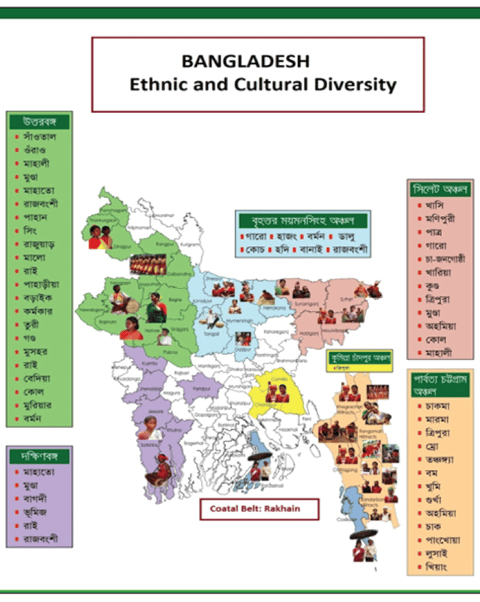
Although the ethnic minorities are scattered all over Bangladesh, they are overwhelminglyconcentrated in several geographical pockets; namely North-West (Rajshahi & Dinajpur), North-East (Sylhet), Central region (Dhaka and Mymensingh), South (Barishal & Patuakhali), with the most significant concentration in the south-eastern corner – the Chittagong Hill Tracts.
World Bank Policy on Indigenous Peoples
The World Bank policy on indigenous peoples requires that the development process fully respects the dignity, human rights, economies, and cultures of Indigenous Peoples. The Bank provides project financing only where free, prior, and informed consultation results in broad community support to the project by the affected Indigenous Peoples. Such Bank-financed projects include measures to (a) avoid potentially adverse effects on the Indigenous Peoples‟ communities; or (b) when avoidance is not feasible, minimize, mitigate, or compensate for such effects. Bank-financed projects are also designed to ensure that the Indigenous Peoples receive social and economic benefits that are culturally appropriate and gender and inter generationally inclusive.
The term “Indigenous Peoples” is used in a generic sense to refer to a distinct, vulnerable, social and cultural group possessing the following characteristics in varying degrees:
self-identification as members of a distinct indigenous cultural group and recognition
of this identity by others;
collective attachment to geographically distinct habitats or ancestral territories in the
project area and to the natural resources in these habitats and territories;
customary cultural, economic, social, or political institutions that are separate from
those of the dominant society and culture; and
an indigenous language, often different from official language of the country/ region.
Tribal peoples in Bangladesh qualifies the characteristics of indigenous peoples referred to the OP 4.10 of the World Bank.
Tribal Culture
Almost all tribal languages have rich folk literature, consisting of poems, songs, fairy tales and legends relating to their past nomadic life. There are plenty of narratives, similar to the MaimensinghaGeetika (a collection of folk ballads from the region of Mymensingh, Bangladesh) in Mogh, Chakma, Khasia and Garo languages. The folk tales of the tribal languages have similarities with those in Bangla. The ballads in some of the languages of the Himalayan foothills are similar to those in Bangla folk literature. Their linguistic aspects are similar to those of early Bangla. The rhymes in Bangla and the tribal languages are similar in subject, rhythm and vocabulary. However, tribal peoples in the plain districts can access public amenities equally with the mainstream communities.
LOCAL GOVERNMENT ENGINEERING DEPARTMENT
SECOND RURAL TRANSPORT IMPROVEMENT PROJECT (RTIP-II)
TRIBAL PEOPLES DEVELOPMENT PLAN
May 2017

Laws, Jurisdiction and Government’s Projects/Initiatives
In Article 27 of the Constitution of the People’s Republic of Bangladesh states that all citizens are equal before law and are entitled to equal protection of law. The national Constitution also outlaws discrimination on grounds of race, religion and place of birth (Article 28) and provides scope for affirmative action (“positive discrimination”) in favor of the backward section of citizens (Articles 28, 29). Consequent upon these provisions, a small percentage of public sector jobs and seats in a number of government educational institutions are reserved for indigenous persons.
In addition, there are some specific laws that make reference to indigenous peoples. In the plains, the only one of such laws is section 97 of the East Bengal State Acquisition and Tenancy Act, 1950 which forbids the transfer of lands owned by aboriginals to non-aboriginal persons without the express consent of the Governments District Officer. The CHT in contrast has a far larger body of laws that refers directly to indigenous peoples. Some of these laws recognize indigenous peoples’ customs regarding the ownership and use of lands and other natural resources. The most important of such laws is the CHT Regulation of 1900. Other laws include the Hill District Council Acts of 1989 and the CHT Regional Council Act of 1998. The last mentioned laws were passed after the signing of the peace accord of 1997, which ended more than twenty years of armed conflict and provided a framework for the recognition and strengthening of the CHT self-government system. The PRSP recommends the forming of a National Commission or Advisory Body consisting of indigenous peoples and representation from indigenous organizations (CHT Regional Council, Circle Chief, Bangladesh Adivasi Forum etc.) and funds should be directly channeled to these communities (PRSP final version).
The government of Bangladesh has a special affairs division under the Prime Ministers Secretariat, which looks after the development of indigenous population outside CHT. The Special Affairs Division provide fund for indigenous populations for their development including stipends for students. The stipend is given once a year for purchase of books, tuition fees etc. Mainly students of colleges and higher classes get the stipend.

Our Vision
Our vision is to ensure basic needs, introduce modern lifestyle and create opportunities aligned with globalization to tribal people so that they could get opportunity to reach in prime in their life.
Our Mission
“Empowering Bangladeshi Tribal Communities Together”
Specific Objective: To ensure that tribal people are getting all the facilities in their life to reach there, where a benefited/non-benefitted Bangladeshi can reach or already reached (Possibly highest growth).
Broad Objectives:
1. To identify existing problems of Tribal life.
2. To develop strategy and solutions to solve Tribal people’s life.
3. To manage donation for the development of Tribal people’s life.
4. To ensure fulfillment of basic need of tribal people.
5. To ensure technological and communication facilities for Tribal people.
6. To conduct continuous research to develop project outline.
7. To assist government to conduct their projects regarding tribal people.
8. To create collaboration with other welfare organizations who are working in this sector.
9. To ensure employment and resolve financial issues of Tribal people.
Background of the Study
To outline a project plan for the development of Tribal Groups of Bangladesh we have studied different reports and our research and development wing already physically visited different region of Bangladesh to closely experience their lifestyle as well as to identify their problems. Different reports denoted that Number of Tribal Groups in Bangladesh is 45, 50, 51 but those reports are published earlier. From recent publications it founds that the number of Tribal Group is now more than 54. It can be 59 or more.
Bangladesh Health Sector Support Program (HSSP)
Framework for Tribal Peoples Plan (FTPP)
March, 2017
MINISTRY OF HEALTH AND FAMILY WELFARE
Government of the People’s Republic of Banglades
Currently the number of Tribal people is more than 1600000 in our country which is 1% of total population. When it’s about population 1% is not a less amount but we found that they are deprived of their rights in many cases.
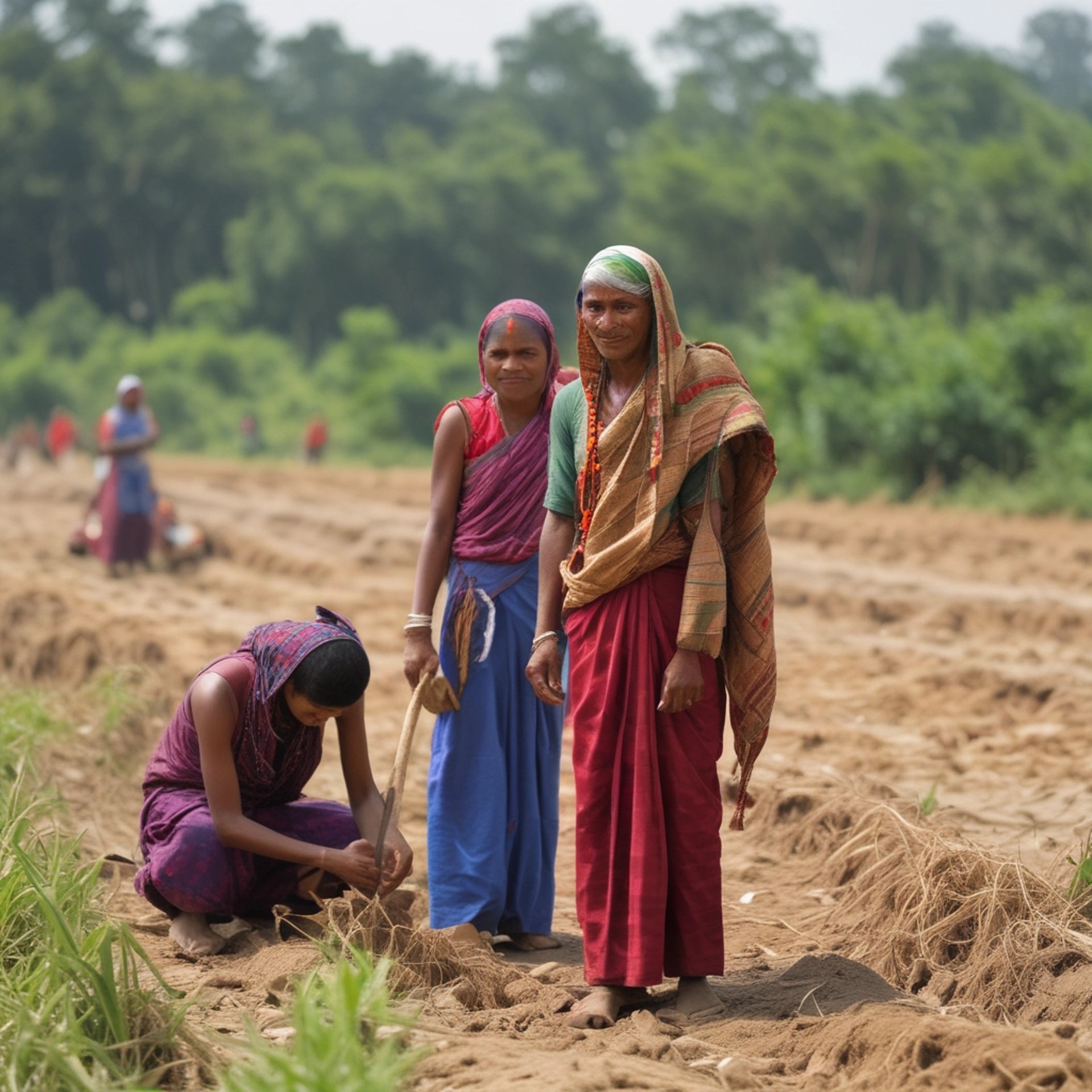
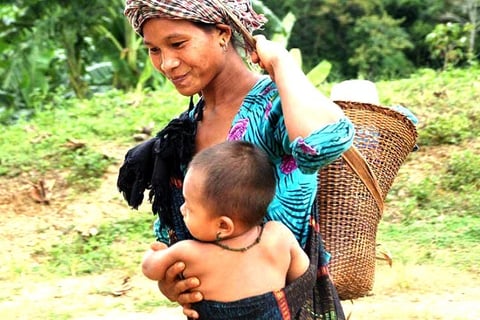
Indigenous peoples mainly live in isolated areas, outside the mainstream of national economies and development support. The areas they inhabit are even more likely to lack basic infrastructure such as roads, markets, schools and health facilities, than the other areas of population. Extreme poverty, low levels of education, poor housing conditions and low levels of physical assets are some of the features that characterize these households.
There is a lack of information on education of the indigenous population and data from 1991 census and other micro studies indicate that literacy and school enrolment of indigenous groups are low. A study conducted by an NGO Research and Development Collective, titled Baseline Survey on Indigenous Peoples in North-West Bangladesh, published in November 2000, Report No. 15 shows that the literacy rate of Santal, Koch, Mahalis are 22%, 17% and 25% respectively. In terms of school-age children, some estimates put the population of 11-15 age-group at 4 300,000 in and less than ¼ are in secondary school that translates into approximately 20,000 children from tribal households that are possible beneficiaries.

Status of tribal children
Our Location
We support Bangladeshi tribal communities through our initiatives, fostering cultural preservation and sustainable development in their regions.
Location
Bangladesh, Tribal Regions
Hours
9 AM - 5 PM

Adibasi's website beautifully showcases the rich culture and needs of our tribal communities in Bangladesh.
Amina Rahman


The clean design and accessibility features make it easy to support our tribal communities effectively.
Rohit Das

